
The HSA Shoebox Strategy: Pay Medical Bills Now, Reimburse Yourself Later
What is the HSA shoebox strategy?
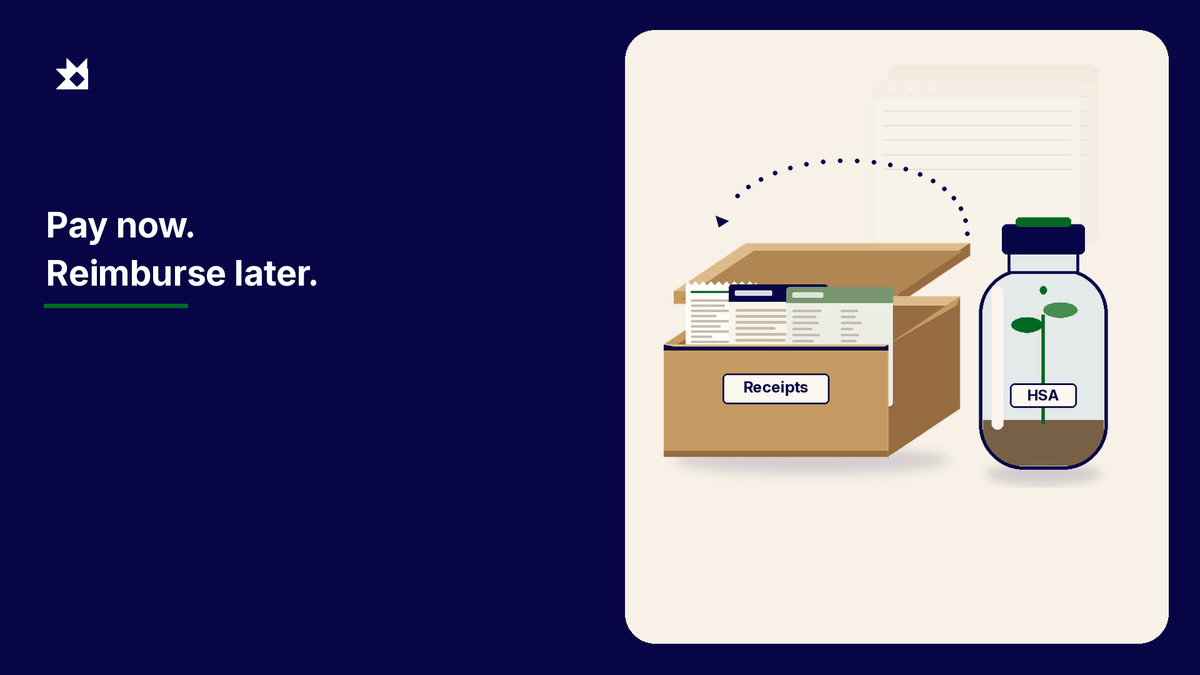
You pay this year's medical bills with your own cash, leave your HSA (health savings account) invested, and keep every receipt. The HSA grows tax-free, and years later you pay yourself back for those old bills, tax-free.
The payoff is tax-free growth, and it gets bigger the longer the money stays invested.
Each receipt in the shoebox is an IOU from your future self that you can cash in whenever you want.
It only fits if you can cover medical bills from other cash without going into debt, and if you have the discipline to keep records for as long as the money stays in the account.
Why is an HSA called triple tax-advantaged?
Federally, an HSA gets three tax breaks:
- Money goes in tax-free. Your own contributions are deductible even if you don't itemize, and your employer's don't count as income.
- It grows tax-free. Interest and investment earnings inside the account aren't taxed.
- It comes out tax-free for qualified medical expenses (medical care as the IRS defines it; Publication 502 has examples).
There's a small bonus: money that goes in through payroll (a cafeteria plan) also skips Social Security and Medicare tax. Contributions you make on your own and deduct don't.
The shoebox strategy gets the most out of break number two by letting the money grow as long as possible.
Who can have an HSA in 2026?
Generally, you need a high-deductible health plan (HDHP) and no other coverage that disqualifies you. You also can't be on Medicare or be someone else's dependent.
2026 HSA numbers
| Self-only | Family | |
|---|---|---|
| HSA contribution limit | $4,400 | $8,750 |
| Extra catch-up contribution, age 55+ | +$1,000 | +$1,000 (each eligible spouse, in their own HSA) |
| HDHP minimum deductible | $1,700 | $3,400 |
| HDHP out-of-pocket maximum (deductibles and copays, not premiums) | $8,500 | $17,000 |
Source: IRS Rev. Proc. 2025-19 and Publication 969.
Newer rules make it easier to qualify:
- Bronze and catastrophic plans count as HSA-compatible from January 1, 2026, even without the usual HDHP numbers. You don't have to buy them through an Exchange, as long as they're the kind of individual plan sold there. Good news if you're self-employed and buy your own coverage.
- Direct primary care: starting in 2026, a qualifying arrangement won't block HSA contributions if fees are no more than $150 a month for one person ($300 for more than one), and you can pay them from the HSA tax-free.
- Telehealth: plans can now permanently cover telehealth before the deductible without costing you HSA eligibility.
Is there a time limit to reimburse yourself from an HSA?
No. Under federal rules, there's no deadline.
IRS Notice 2004-50 (Q&A 39) says you can take money out in a later year to pay yourself back for an earlier year's qualified medical expense, and that "there is no time limit on when the distribution must occur." IRS Publication 969 adds, "You don't have to make withdrawals from your HSA each year."
To keep a late reimbursement tax-free, your records need to show:
- The money went only to qualified medical expenses.
- The expense wasn't already paid or reimbursed from another source (insurance, an FSA or HRA, another HSA).
- You didn't claim it as an itemized medical deduction on Schedule A in any year.
One more rule: the expense must have been incurred after your HSA was established. Bills from before you opened it never qualify.
So protect that date. If you switch providers, roll over or transfer the money instead of closing one account and opening another. A rollover from another HSA generally keeps the original date, so older receipts stay eligible.
How much could the shoebox strategy grow?
Picture two people, each putting $3,000 a year into an HSA for 10 years, each with $3,000 a year of deductibles, copays, and prescriptions.
- You (the shoebox): you have $6,000 a year to work with. $3,000 funds the HSA and stays invested. The other $3,000 pays your medical bills in cash, and you keep the receipts.
- The other person (spend as you go): they can only afford to fund the HSA. With no other cash for medical bills, they have to pay those bills from the HSA.
Illustrative example (assumed 7% return, not a promise; federal view, no fees)
| Spend as you go | Shoebox (pay cash, keep receipts) | |
|---|---|---|
| Put into HSA over 10 years | $30,000 | $30,000 |
| Paid from HSA for bills along the way | $30,000 | $0 |
| HSA balance after 10 years | $0 | about $41,400 |
| Saved receipts you can reimburse tax-free | none | $30,000 |
| Still invested after reimbursing every receipt | $0 | about $11,400 |
Assumptions: $3,000 a year contributed and $3,000 a year of qualified medical costs for 10 years, both at year end. Returns aren't guaranteed, and investment losses are possible.
The difference is tax-free growth. Your HSA money never leaves the account, so it grows tax-free (federally) and comes out tax-free when you reimburse your saved receipts. The other person's HSA is emptied by bills every year, so it never gets the chance to grow.
And time works in your favor. After 10 years, you could reimburse every receipt and still have about $11,400 invested. Leave the money in longer, and the tax-free growth keeps compounding, so it gets bigger with every extra year.
This only works because you had the other $3,000 to pay bills without borrowing. If that's not you, see the next sections.
What receipts and records should you keep?
Everything rides on your records. For each expense, keep:
- The itemized receipt or bill from the provider or pharmacy.
- The Explanation of Benefits (EOB), your insurer's statement of what it covered and what you owed.
- Proof you paid, like a card or bank statement.
- A note that it wasn't reimbursed elsewhere (insurance, an FSA or HRA, another HSA) or itemized on Schedule A.
A few habits make it painless:
- Scan everything to cloud storage or a receipt app the day it arrives.
- Keep a spreadsheet log: date, provider, patient, amount, how you paid, and reimbursed yes/no.
- Back up both the scans and the log.
- Don't send any of it with your return. Keep it with your tax records in case the IRS asks.
When you reimburse yourself, mark those receipts "reimbursed" so you never claim the same bill twice.
What happens if you lose the receipts or use HSA money for something else?
This is the real risk. If you take HSA money out for something that isn't a qualified medical expense, or can't prove it was, the withdrawal is taxable income, plus an additional 20% tax before age 65.
After 65, or if you become disabled or die, the 20% goes away and a non-medical withdrawal is just taxed as ordinary income. Qualified medical withdrawals stay tax-free at any age.
Lost records can turn a tax-free reimbursement into a taxable one.
When does the shoebox strategy not make sense?
- When cash is tight. Only pay out of pocket if you can without debt or draining your emergency fund. Credit card interest can wipe out the tax benefit quickly.
- When your HSA sits in cash. Little growth means little to protect. Many providers offer investment options, so check yours.
- When decades of record-keeping isn't realistic. If the receipts won't survive, neither will the strategy.
- When a big medical year hits. Using your HSA right away is fine. That's what it's for.
Does my state tax HSAs?
Most states follow the federal rules, with two big exceptions:
- California doesn't recognize HSAs. You add back the federal HSA deduction on your California return, employer contributions (W-2 box 12, code W) are added to California wages, and California taxes the HSA's interest and earnings each year. Since those amounts were already taxed, California generally won't tax them again on a later non-qualified withdrawal. The federal breaks still apply, so the strategy can still work for Californians, just with less tax-free growth.
- New Jersey also doesn't recognize HSAs. A 2026 bill to change that hasn't been enacted.
Check your state's rules or ask a tax pro.
When to talk to a bookkeeper or tax pro
Check in with a bookkeeper or tax pro:
- At open enrollment, before choosing an HDHP over a traditional plan.
- If you're self-employed and buying your own coverage.
- Before a large reimbursement from old receipts.
- As you approach 65 or Medicare enrollment.
- If you live in California or New Jersey.
An HSA works best as part of a bigger plan. To see how it fits with your other tax-advantaged accounts, read Traditional vs Roth 401(k): Same Paycheck, Different Retirement. For how retirement income is taxed, including in California, see Same Income, Different Tax Bill: A W-2 Earner vs a Retiree in California.
This article is for general education and uses a simplified, illustrative example with an assumed return. It isn't tax, legal, or investment advice. HSA rules and limits change, and state rules differ. Talk with a bookkeeper or tax pro about your situation before acting.
Weighing an HSA at open enrollment, or want a receipt system that lasts? We're happy to talk it through whenever you're ready.
Quick answers
Is there a deadline to reimburse myself from my HSA?
No federal deadline, as long as the expense came after you opened the HSA, wasn't reimbursed elsewhere or itemized, and you keep records.
Can I reimburse myself for expenses from before I opened my HSA?
No. Only expenses incurred after the HSA was established qualify.
Do I need to send receipts to the IRS?
No. Keep them with your tax records in case the IRS asks.
What if I'm over 65 and use HSA money for something non-medical?
It's taxed as ordinary income, without the 20% additional tax. Medical reimbursements stay tax-free.
Can I still contribute to an HSA if I'm on Medicare?
No, but you can still spend or reimburse from the money already there, including for old receipts.